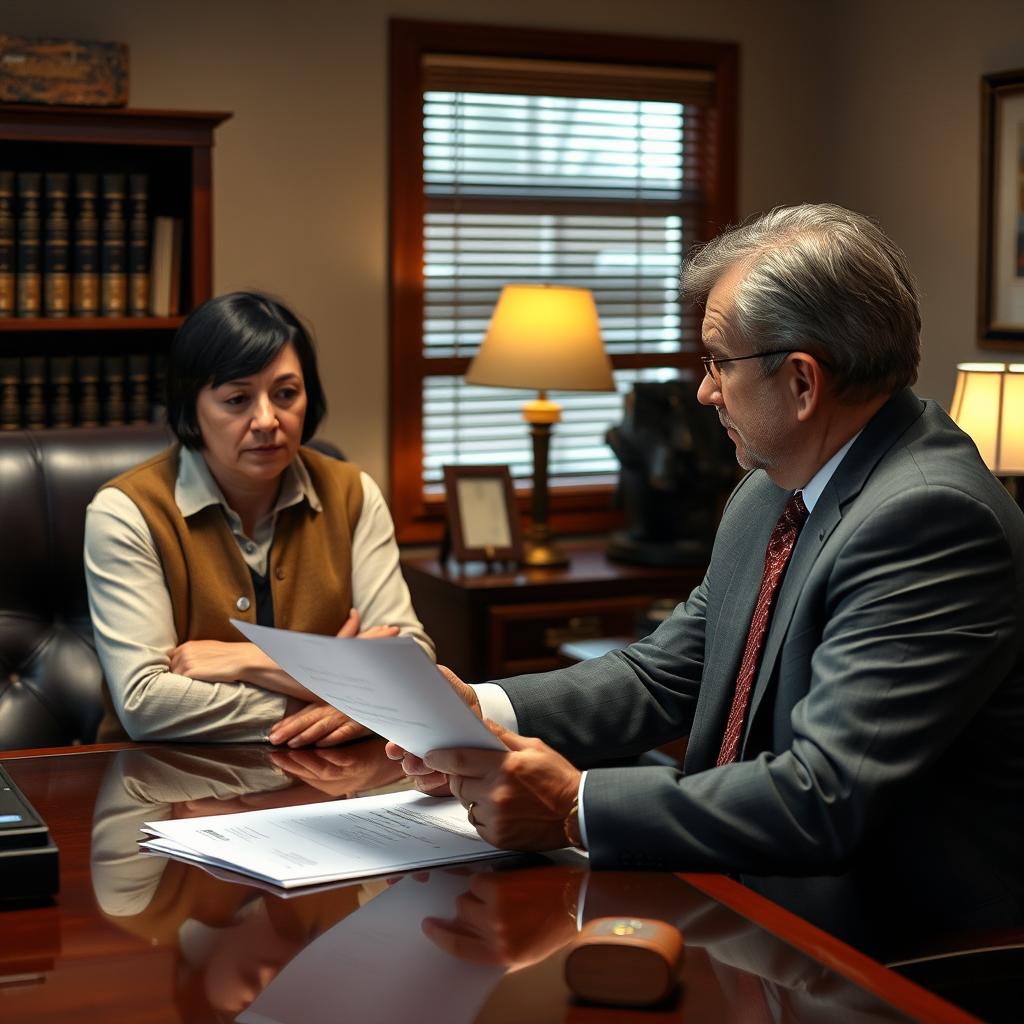
Federal Grand Jury Lawyer Calvert County, MD
A federal grand jury investigation carries consequences that extend far beyond a state court proceeding. In Calvert County and throughout Maryland, the U.S. Attorney’s Office for the District of Maryland convenes grand juries in Baltimore and Greenbelt to hear evidence and determine whether to return an indictment. If you or your business has received a target letter, a subpoena for testimony, or a request for documents connected to a federal grand jury matter, Law Offices Of SRIS, P.C. Concentrates its criminal defense practice on guiding clients through this process. Mr. Sris and his Of Counsel bring decades of combined experience to federal criminal defense, representing individuals at the earliest stages of an investigation through trial and, when necessary, appeal. Law Offices Of SRIS, P.C. – Advocacy Without Borders.
Federal grand jury proceedings are investigations conducted in private, without a judge present and without defense counsel in the room. A prosecutor from the U.S. Attorney’s Office presents witness testimony, documents, and other evidence to the grand jurors. The grand jury’s role is to decide whether probable cause exists to believe a federal crime has been committed. If a majority of grand jurors vote to return a true bill, an indictment issues and the formal prosecution begins. Because the defense has no right to cross-examine witnesses or to present its own evidence during the grand jury session, the pre‑indictment phase is critical. Experienced defense counsel can engage with prosecutors, submit exculpatory materials, and work to persuade the government to decline prosecution or to narrow the scope of any eventual charging document. Law Offices Of SRIS, P.C. represents targets, subjects, and witnesses in federal grand jury matters arising in Calvert County, from the initial contact through the resolution of any charges. To request a consultation, call (888) 437‑7747.
What a Federal Grand Jury Means in Calvert County, Maryland
Federal crimes in Maryland are prosecuted in the United States District Court for the District of Maryland, which sits in two divisions — Baltimore (101 West Lombard Street, Baltimore, MD 21201) and Greenbelt (6500 Cherrywood Lane, Greenbelt, MD 20770). While the federal courthouse is not physically located in Calvert County, residents of Prince Frederick, Solomons, Chesapeake Beach, Dunkirk, Lusby, Owings, and other Calvert County communities who become involved in a federal criminal matter will typically appear in the Greenbelt division because of its geographic proximity. Federal grand juries are drawn from the entire district, and an investigation based in Calvert County can be presented to a grand jury sitting in either division.
A federal grand jury proceeding is distinct from a trial and is not open to the public. The grand jury’s function is accusatory, not adjudicatory. It hears evidence that the Assistant U.S. Attorney chooses to present. Because the defense does not participate, the standard for indictment — probable cause — is often met without difficulty when the government controls the evidence. Nevertheless, the period before indictment is a window during which defense counsel can make a difference: by communicating with the prosecutor, by advising the client on how to respond to a subpoena or a target letter, and by preserving evidence and witness statements that may later be crucial. Mr. Sris and his Of Counsel have extensive experience handling federal investigations originating from FBI, DEA, IRS‑CI, ATF, HSI, and Secret Service inquiries, many of which lead to grand jury presentations. Our Maryland location serves clients throughout Calvert County and the surrounding Fourth Judicial District.
How Mr. Sris and His Of Counsel Handle Federal Grand Jury Cases
The approach begins with a careful assessment of where you stand in the investigation. A prosecutor may tell you that you are a “target” — a person the government believes committed a crime — a “subject” — someone whose conduct is within the scope of the investigation but who is not yet considered a target — or simply a “witness.” This classification drives the defense strategy. If you are a target or subject, early engagement can sometimes persuade the government to issue a declination letter or to present a plea offer before charges are filed. As a witness, you need counsel who can protect your Fifth Amendment privilege against self‑incrimination and advise you on the scope of any subpoena or immunity agreement.
When a grand jury returns an indictment, the case moves to the district court. The initial appearance and arraignment take place before a magistrate judge, where bail and conditions of release are set. The federal bail standard under the Bail Reform Act focuses on risk of flight and danger to the community, and the government often seeks pretrial detention in serious cases. Mr. Sris and his Of Counsel then engage in motion practice — including challenges to the indictment, motions to suppress evidence, and requests for discovery under the federal rules. Federal sentencing under the U.S. Sentencing Guidelines is a complex, points‑based calculation, and preparation for sentencing often begins at the pretrial stage. Because the federal system has no parole, every day of liberty matters. Mr. Sris and his Of Counsel work to build a well‑prepared defense that addresses both the immediate procedural steps and the long‑term consequences a federal conviction can bring.
About Mr. Sris and His Of Counsel Team
Mr. Sris, Owner and Founder of Law Offices Of SRIS, P.C., has practiced criminal defense since 1997 and is a former prosecutor. That firsthand knowledge of how investigations are built and how charging decisions are made informs every stage of the firm’s federal criminal defense work. He is admitted to practice in Virginia, Maryland, the District of Columbia, New Jersey, and New York, and he regularly appears in federal courts across those jurisdictions. Mr. Sris testified before the Virginia House Courts of Justice Committee in support of 2019 HB 635 (chief patron Del. David Bulova). The Of Counsel team includes an attorney who served as an Assistant State’s Attorney in Maryland, adding further prosecutorial insight to the firm’s defense strategies. Mr. Sris and his Of Counsel bring over 120 years of combined legal experience. Results may vary. The firm has documented over 4,739 case results across all practice areas since 1997.
Frequently Asked Questions
What is the difference between state and federal charges?
Federal charges are prosecuted by the United States Attorney’s Office rather than by a local state’s attorney, and they carry penalties under the federal sentencing guidelines, which are generally more severe than state punishments and offer no parole. State charges in Maryland are handled in the District Court or Circuit Court, while federal cases are heard in U.S. District Court. Because federal agencies like the FBI and DEA often conduct long‑term investigations before charges are filed, a federal defendant may face a more extensive record of evidence and higher mandatory minimums. Having a defense team experienced in both systems is critical to understanding the full exposure a federal case creates. For federal grand jury matters in Calvert County, contact our firm at (888) 437‑7747.
How does a federal grand jury work in a case arising from Calvert County?
A federal grand jury in the District of Maryland hears evidence presented by an Assistant U.S. Attorney and decides whether to return an indictment, all in closed session without the presence of a judge or defense lawyer. The grand jury is composed of 16 to 23 citizens drawn from the district. Only the prosecutor and a court reporter are present. The prosecutor calls witnesses and introduces documents. If at least 12 grand jurors find probable cause, they issue a true bill — the indictment. Because Calvert County falls within the Greenbelt division’s catchment area, a grand jury sitting in Greenbelt is likely to handle matters investigated in Prince Frederick, Solomons, or other southern Maryland communities. The process is entirely one‑sided, which is why early defense involvement before an indictment is returned can be so important.
How do federal sentencing guidelines work in a case handled in Maryland?
Federal sentencing at the U.S. District Court for the District of Maryland follows the United States Sentencing Guidelines — a detailed, points‑based calculation that combines the offense level with the defendant’s criminal history category to produce a recommended range of imprisonment. While the guidelines are advisory after the Supreme Court’s decision in Booker, judges still rely heavily on them. Mandatory minimum statutes override downward departures for many drug, firearm, and child‑exploitation offenses. Defenses that focus on acceptance of responsibility, substantial assistance to the government under section 5K1.1, and safety‑valve eligibility can materially reduce the ultimate sentence. Each guideline calculation is fact‑intensive and requires a thorough review of the indictment and the defendant’s background. Law Offices Of SRIS, P.C. has extensive experience analyzing guideline exposure and advocating for favorable outcomes.
Do I need a lawyer if I am only a witness in a federal grand jury investigation?
Yes, retaining counsel as a witness is strongly advised because testimony given before a grand jury can later be used against you if you become a target, and a witness can unknowingly waive important privileges or expose themselves to perjury charges. A grand jury witness does not have the right to have an attorney in the grand jury room, but the witness may halt questioning to step outside and consult with counsel. An experienced federal criminal defense attorney can prepare you for what to expect, help you understand the scope of any subpoena, and assert valid privileges. If the investigation later shifts and you receive a target letter, having a lawyer already familiar with the facts is invaluable. Reach our firm at (888) 437‑7747 for guidance on your role.
How long does a federal criminal case typically last from indictment to resolution?
The timeline of a federal criminal case depends on the complexity of the charges, the defendant’s decisions regarding trial or plea, and the court’s calendar, but a typical felony case in the District of Maryland may span six to eighteen months from indictment to sentencing, while complex fraud or RICO matters can take well over a year. The Speedy Trial Act requires the government to try a defendant within 70 days of the initial appearance, though many exclusions apply for motions, discovery, and continuances requested by the defense. Sentencing hearings are usually scheduled several months after a verdict or guilty plea to allow the probation office to prepare a presentence report. Mr. Sris and his Of Counsel work to move matters forward efficiently while protecting the client’s right to a thorough defense.
Can federal charges be avoided if my attorney presents information before an indictment is returned?
In some cases, an experienced defense attorney can persuade the U.S. Attorney’s Office to decline prosecution or to present a lesser charge to the grand jury by submitting exculpatory evidence and a well‑prepared factual memorandum during the pre‑indictment phase. While there is no guarantee, early intervention — often called a prefiling argument — can influence the government’s charging decision. The strategy may involve showing that the key witness is unreliable, that documents have been misinterpreted, or that the conduct does not violate the statute alleged. This work is time‑sensitive because once an indictment is returned, the prosecutor’s position hardens. For anyone who has received a target letter or subpoena in Calvert County, prompt consultation with counsel is essential. Call (888) 437‑7747 to discuss your situation.
Information about federal criminal proceedings can be found at the official website of the U.S. District Court for the District of Maryland and Title 18 of the U.S. Code.
Attorney advertising. Prior results do not guarantee a similar outcome.
Case results depend on a variety of factors unique to each case. Results may vary.