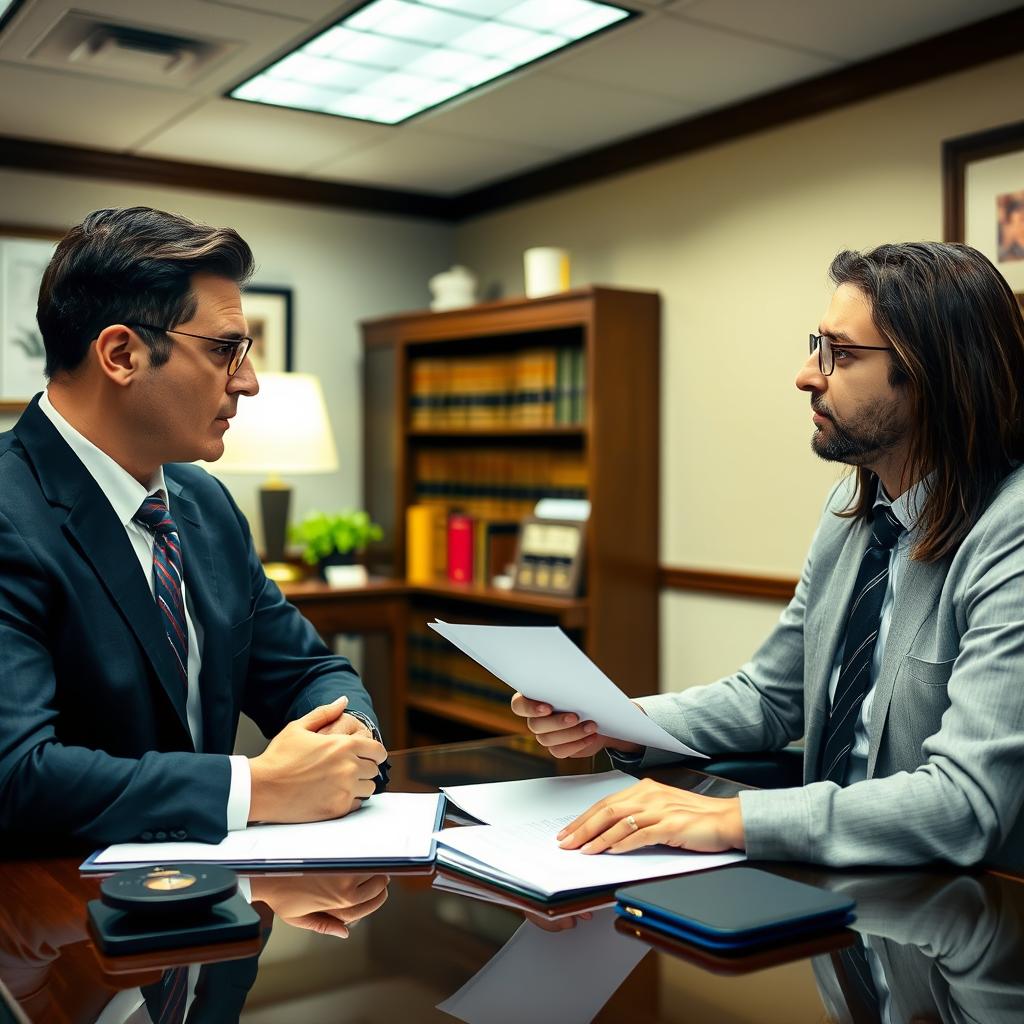
What are my Miranda rights in Virginia
If law enforcement questions you in Virginia, the words you speak can become evidence against you. Miranda rights exist to protect you from self‑incrimination during custodial interrogation. These rights derive from the United States Supreme Court decision in Miranda v. Arizona, and Virginia has codified them in Va. Code § 19.2‑59. Law Offices Of SRIS, P.C. Concentrates its practice on criminal defense throughout the Commonwealth. To discuss your situation, reach our firm at (888) 437‑7747.
What Are Miranda Rights?
Miranda rights are the set of warnings that police must give before conducting a custodial interrogation. In Virginia, the required warning includes at least four components: the right to remain silent, the warning that anything the person says can be used against them in court, the right to an attorney, and the statement that if the person cannot afford an attorney one will be appointed for them. An experienced criminal defense attorney looks closely at whether the police satisfied each of these requirements before any questioning occurred.
The Virginia statute essentially tracks the federal constitutional standard. Va. Code § 19.2‑59 provides that no custodial statement is admissible in evidence unless the person was advised of those rights and knowingly, intelligently, and voluntarily waived them. The burden is on the Commonwealth to show both a proper warning and a valid waiver.
When Do Miranda Rights Apply in Virginia?
Miranda rights are triggered only when two conditions are met simultaneously: the person is in custody, and the police are interrogating them. Custody means a formal arrest or a situation in which a reasonable person would not feel free to leave. A traffic stop alone does not ordinarily trigger Miranda, but once a person is handcuffed or placed in a patrol car, custody likely exists. Interrogation includes direct questioning as well as any words or actions the police should know are reasonably likely to elicit an incriminating response.
Virginia courts examine the totality of the circumstances to decide whether a reasonable person would have believed they were in custody. Courts consider factors such as the location, duration, and character of the encounter, whether the officer displayed weapons, the number of officers, and the tone and content of the officer’s statements. If either custody or interrogation is absent, Miranda warnings are not required, although any statements may still be challenged on voluntariness grounds.
What Happens If the Police Fail to Read My Miranda Rights in Virginia?
When police obtain a statement in violation of Miranda, the primary remedy is suppression of that statement at trial. The prosecution cannot use the statement itself, or any evidence discovered as a direct fruit of the unwarned statement, during its case‑in‑chief. However, failure to give Miranda warnings does not require dismissal of the charges. The case may still proceed if the prosecution has other evidence of guilt.
Additionally, a statement taken in violation of Miranda may still be used to impeach the defendant’s credibility if they testify inconsistently at trial. This is limited; the prosecution cannot use the statement to build its affirmative case. A thorough defense attorney will file a motion to suppress and argue that the statement was obtained in violation of the accused’s rights under both the Fifth Amendment and Va. Code § 19.2‑59.
Exceptions to Miranda in Virginia
Several exceptions exist. The public‑safety exception allows officers to ask questions reasonably prompted by a concern for immediate public safety without first giving Miranda warnings. For example, asking an arrestee about the location of a firearm they may have discarded is often permitted under this exception.
Routine booking questions—such as name, address, date of birth, and other biographical data—do not generally require Miranda warnings because they are not considered interrogation. Likewise, spontaneous or volunteered statements made without any police questioning are admissible even if Miranda warnings were never given. In Virginia, these exceptions are applied consistently with federal precedent.
About Mr. Sris and His Of Counsel Team
Mr. Sris, Owner and Founder of Law Offices Of SRIS, P.C., is a former prosecutor who established the firm in 1997. He brings a prosecutor’s insight to every criminal defense matter. Mr. Sris testified before the Virginia House Courts of Justice Committee in support of 2019 HB 635 (chief patron Del. David Bulova). His five‑jurisdiction bar admissions—Virginia, Maryland, the District of Columbia, New Jersey, and New York—allow the firm to serve clients throughout the mid‑Atlantic.
Mr. Sris and his Of Counsel bring over 120 years of combined legal experience. Results may vary. Collectively, they have documented 4,739+ case results across all practice areas since 1997. The team concentrates on criminal defense, drawing on firsthand prosecutorial and law‑enforcement backgrounds to identify weaknesses in the government’s case.
Law Offices Of SRIS, P.C. serves clients across Virginia from its locations in Fairfax, Richmond, Ashburn, Arlington, and Shenandoah. All consultations are by appointment. To speak with Mr. Sris and his team about your Miranda rights or any criminal charge, call (888) 437‑7747.
Frequently Asked Questions
What are my Miranda rights in Virginia?
In Virginia, your Miranda rights include the right to remain silent, the warning that anything you say can be used against you in court, the right to an attorney during questioning, and the right to have an attorney appointed if you cannot afford one. These rights apply when you are in custody and subjected to interrogation. Police must inform you of these rights before questioning; otherwise, any statement you make may be excluded from trial. However, the failure to give Miranda warnings does not automatically dismiss your case. If you believe your rights were violated, an experienced criminal defense attorney can file a motion to suppress the statement.
When do police have to read Miranda rights in Virginia?
Police must read Miranda rights only when a suspect is in custody and the officers interrogate them. Custody means a formal arrest or an equivalent restraint on freedom of movement. If you are free to leave or the questioning is merely investigatory, Miranda warnings are generally not required. A traffic stop or brief detention does not automatically trigger Miranda; it depends on the circumstances. Once an officer handcuffs you, places you in a patrol car, or subjects you to prolonged questioning, Miranda likely applies. An attorney can assess whether a custodial interrogation occurred in your case.
Can my case be dismissed if the police didn’t read me my Miranda rights in Virginia?
Not automatically. A Miranda violation ordinarily results in the suppression of the unwarned statement, not dismissal of the charges. The prosecution may still proceed if it has other evidence of guilt. However, if the statement was the only significant evidence, suppression can substantially weaken the government’s case. In some situations, a skilled suppression argument can lead to a favorable plea offer or even a dismissal. You should consult a criminal defense lawyer to evaluate how a Miranda violation affects your specific matter.
Do I have to answer police questions if I am not under arrest in Virginia?
No. You have the right to decline to answer police questions at any time, even if you are not in custody and no Miranda warnings have been given. Simply telling the officer, “I wish to remain silent,” or “I want to speak with an attorney,” is sufficient. Exercising your right to silence cannot be used as evidence of guilt. In Virginia, explicitly invoking your right to counsel ends the interrogation until you have an attorney present.
What should I do if I already made a statement to the police without Miranda warnings?
Contact a criminal defense attorney immediately and do not discuss the case with anyone else. Even if Miranda warnings were not given, the statement may still be admissible if you were not in custody or if an exception applies. An attorney can evaluate whether the statement can be suppressed and advise you on the trusted course of action. Preserve any documents, recordings, or police reports related to your interaction.
Can silence be used against me in Virginia?
Under the Fifth Amendment, the prosecution generally cannot use your pre‑arrest or post‑arrest silence as evidence of guilt during its case‑in‑chief. Virginia courts follow this rule. However, if you testify at trial, your silence during a custodial interrogation may sometimes be used for impeachment purposes in limited circumstances. The safest approach is to explicitly invoke your right to remain silent and ask for an attorney.
How does Virginia Code § 19.2‑59 protect my rights?
Va. Code § 19.2‑59 codifies the Miranda rule in Virginia, requiring that no custodial statement is admissible unless the person was advised of their constitutional rights and knowingly, intelligently, and voluntarily waived them. The Commonwealth must prove both the warning and the waiver. If the police fail to comply with this statute, the statement is inadmissible. The statute applies to all law enforcement agencies in Virginia and mirrors the federal constitutional protections.
Do Miranda rights apply to juveniles in Virginia?
Yes. Juveniles taken into custody are entitled to Miranda warnings before custodial interrogation, just like adults. Virginia courts also evaluate whether a juvenile’s waiver was knowing, intelligent, and voluntary, considering age, education, experience, and whether a parent or guardian was present. In some instances, a juvenile’s statement may be suppressed even if Miranda warnings were given if the circumstances show the child could not truly understand the rights. An experienced juvenile defense attorney can challenge a questionable waiver.
What is the public‑safety exception to Miranda in Virginia?
The public‑safety exception allows officers to ask questions reasonably necessary to address an immediate threat to public safety without first providing Miranda warnings. For example, if an officer arrests a suspect near a school and asks whether the suspect has a weapon in the area, that statement may be admissible even without Miranda warnings. Virginia courts apply this exception consistent with United States Supreme Court precedent. The exception is narrow and does not allow general questioning about the crime.
Do I need a lawyer if my Miranda rights were violated in Virginia?
Yes. An experienced criminal defense attorney can determine whether a Miranda violation occurred, file a motion to suppress the statement, and advocate for favorable outcomes in your case. Even if the violation seems clear, the legal analysis can be nuanced. A lawyer can also examine whether the statement was voluntary and whether other evidence should be excluded as the fruit of the unlawful interrogation. To discuss your situation, reach Law Offices Of SRIS, P.C. at (888) 437‑7747.
What is the difference between Miranda rights and the right to an attorney in Virginia?
Miranda rights include the right to have an attorney present during custodial interrogation. The broader Sixth Amendment right to counsel attaches once formal charges are filed and applies at all critical stages of the prosecution. In Virginia, if you are interrogated after charges are filed and you have not waived your right to counsel, any statement may be suppressed under both Miranda and the Sixth Amendment. The two protections are distinct, and a lawyer can help you assert both.
Can I invoke my Miranda rights after I have already started talking?
Yes. You may invoke your right to remain silent or your right to counsel at any time during a custodial interrogation in Virginia. Once you unambiguously assert your right to remain silent, the police must stop questioning. If you request an attorney, all interrogation must cease until you have consulted with one or you yourself reinitiate discussion. An attorney can later challenge any statements obtained after your invocation.
How long do Miranda rights last in Virginia?
Once Miranda warnings are given and you waive your rights, the waiver remains valid for a reasonable period of time unless you clearly reassert your rights. Virginia courts consider factors such as the passage of time, changes in location, and whether fresh warnings were given before subsequent questioning. If the circumstances suggest that the earlier waiver no longer reflects a knowing and voluntary choice, a court may suppress later statements. The safest course is to re-invoke your rights if you are questioned again after a break.
Related pages:
Attorney advertising. Prior results do not guarantee a similar outcome. Case results depend on a variety of factors unique to each case. Results may vary.